

By Evan Kowalski · Editor
Published · Updated
Answer in brief
The actions that lower a high premium, in order of typical impact: compare several insurers (often 20–40% for the same coverage), raise deductibles (15–25% off collision and comprehensive), drop collision and comprehensive on low-value cars, enrol in telematics (5–30%), bundle home or renters (10–25%), correct your mileage and vehicle use, and claim every discount you qualify for. Cutting liability limits is not on the list—it saves little and exposes you to the largest losses.
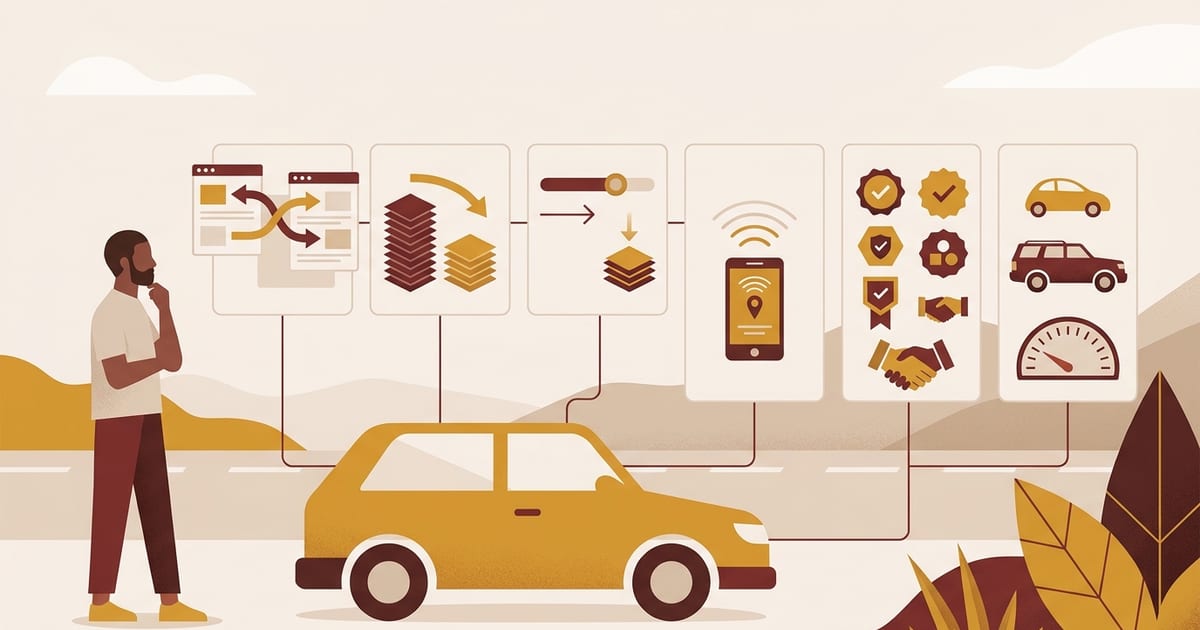
Actions ranked by impact
| Action | Typical saving | Trade-off |
|---|---|---|
| Compare 3–5 insurers | 20–40% | Time; possibly a new company |
| Raise deductibles to $1,000 | 15–25% of collision/comp | Pay more after a claim |
| Drop collision/comp on a low-value car | Up to 50% of premium | Pay for your own car's damage |
| Telematics programme | 5–30% | Share driving data |
| Bundle home/renters | 10–25% | One insurer for both |
| Correct mileage / usage | 5–15% | None if accurate |
| Pay in full | 5–10% | Cash flow |
| Defensive driving course | 5–10% | A few hours |
| Other discounts (student, paperless, autopay, safety) | 2–10% each | Minimal |
What not to cut
Liability limits. Dropping from 100/300 to 25/50 saves relatively little because liability pricing is driven by frequency, not limit, and it leaves you exposed to the one kind of claim that can exceed your savings. Uninsured motorist coverage is similarly inexpensive for what it protects.
The order to do it in
- 1
Read your declarations page
Note coverage, deductibles, discounts, surcharges and the vehicle symbol.
- 2
Decide the coverage you want
Fix limits and deductibles; decide about collision/comp on each car.
- 3
Get quotes for that exact coverage
Three to five, same inputs. See when to switch.
- 4
Ask your current insurer to match or re-rate
Mention discounts you may be missing.
- 5
Switch without a gap
New policy starts the day the old one ends.
Quote finder
Find auto insurance quotes that fit your situation
Questions & answers
What is the fastest way to lower car insurance?
Compare quotes from several insurers for your exact coverage. The spread is usually larger than any single discount.
Should I lower my liability to save money?
No. It saves little and exposes you to the largest possible losses.
Does raising my deductible really help?
Yes—typically 15–25% off the collision and comprehensive portion of the premium.
Terms used in this guide
- Deductible
- What you pay before collision or comprehensive pays. Higher deductibles lower premiums.
- Telematics (usage-based insurance)
- Pricing partly on measured driving behaviour via an app or device.
- Bundling (multi-policy discount)
- A discount for holding auto and home or renters insurance with one insurer, typically 10–25%.
Sources and references
Legal figures on this page (minimum limits, filing periods, statutory benefits) are checked against the primary law or the state insurance regulator listed below. Links and figures last verified Nov 2026.
- Background on: Pay-as-you-drive auto insurance (telematics) — Insurance Information InstituteIndependent researchUsage-based and per-mile pricing models, what telematics programmes measure, and state limits on their use.
- Trends and Insights: Auto insurance rates (June 2024) — Insurance Information Institute (2024)Independent researchWhy premiums rose 2021–2024: crash frequency and severity, repair and labour inflation, vehicle technology, attorney involvement.
- 2019–2023 Auto Insurance Database: average premium supplement — National Association of Insurance Commissioners (2025)Statistical dataCountrywide average expenditure $1,281 in 2023 (+13.98%); combined average premium $1,438; state tables for liability, collision and comprehensive.
- Facts + Statistics: Auto insurance — Insurance Information Institute (2025)Statistical dataNAIC countrywide average auto expenditure: $1,127 (2022), $1,282 (2023); most expensive states in 2023 were Florida, Louisiana and New York.
- Nine ways to lower your auto insurance costs — Insurance Information InstituteConsumer guidanceShop at least three quotes; raising a deductible from $200 to $500 can cut collision/comprehensive cost 15–30%, $1,000 can save 40%+; drop physical damage on cars worth under 10× the premium; bundling, low-mileage and good-student discounts.
- How much auto coverage do I need? — Insurance Information InstituteConsumer guidanceWhy state minimums are a floor; choosing liability limits that protect assets; when collision and comprehensive are worth keeping.
- Insurance research and advocacy — Consumer Federation of AmericaConsumer guidanceConsumer-side research on auto insurance pricing, non-driving rating factors and affordability.
- What determines the price of an auto insurance policy? — Insurance Information InstituteConsumer guidanceRating factors: driving record, mileage, location, age, gender, vehicle, credit-based insurance score, coverage choices. Notes ZIP-code rating is prohibited in California and Michigan and gender rating is prohibited in seven states.
Practical guidance on this page is original editorial work. Cited sources support factual statements and do not endorse this site. Dollar ranges described as typical or illustrative are editorial estimates, not figures from these sources.
Guide
When to Switch Car Insurance Companies
How to decide whether to switch insurers after a rate increase, when the best moments are, how to avoid a lapse, and what loyalty is actually worth.
Guide
The 12 Reasons Car Insurance Rates Are High
Every factor that sets a car insurance premium—record, age, location, vehicle, credit, coverage, market trends—ranked by how much each one typically moves the price.
Guide
How Your Vehicle Affects Car Insurance
Why some cars cost twice as much to insure as others: loss history, repair cost, horsepower, size, theft rates and safety equipment.