

By Naomi Feld · Research Writer
Published · Updated
Answer in brief
Insurers divide each state into rating territories and set base rates from local claims experience. Dense urban areas with high crash frequency, theft, litigation and uninsured-driver rates can cost double a rural area in the same state. Between states the gap is wider still—Louisiana, Florida, Michigan and New York are consistently among the most expensive; Maine, Vermont, Idaho and Ohio among the least. You cannot change your territory without moving, but insurers weight territories differently, so comparing matters more in high-cost areas.
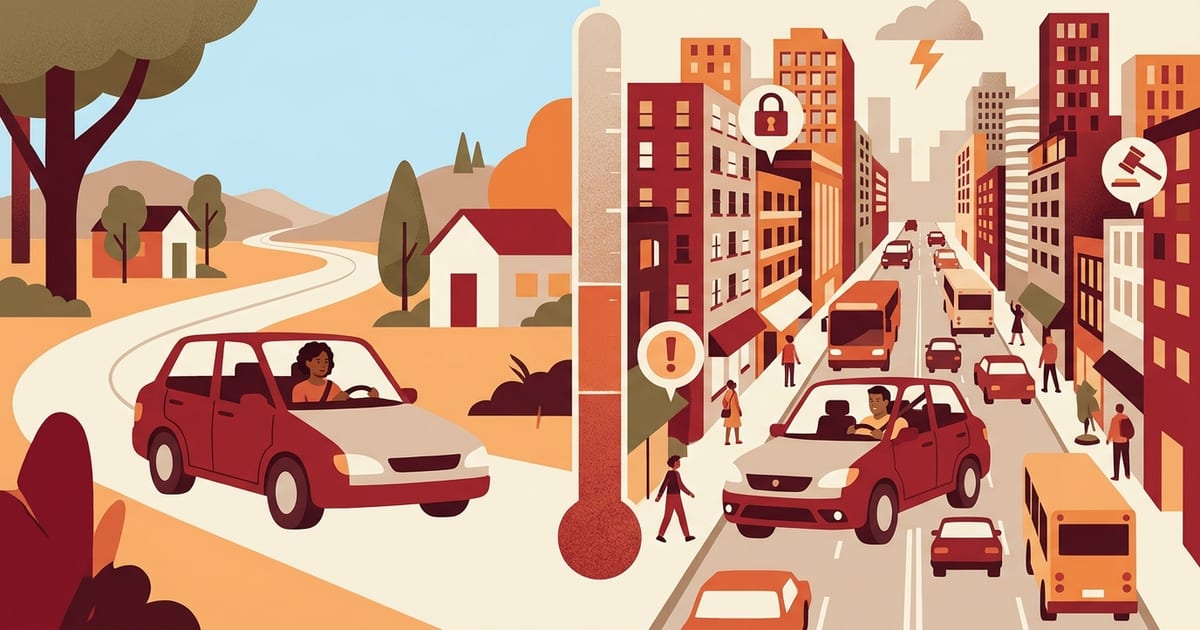
What makes a territory expensive
- Crash frequency — traffic density and road design.
- Injury claim severity and litigation — some metros have far higher injury-claim costs.
- Theft and vandalism — drives comprehensive premiums.
- Weather — hail belts, hurricane coasts, flood zones.
- Uninsured drivers — raises UM and collision costs for everyone else.
- Repair costs — local labour rates and parts availability.
State-level patterns
No-fault states with generous benefits (Michigan historically, Florida, New York, New Jersey) and states with high litigation (Louisiana) tend to top the list. Low-density states with low litigation sit at the bottom. State minimum-coverage laws also matter: a state that requires more coverage has a higher minimum premium by definition.
Garaging address
The address where the car is normally kept overnight sets the territory. Using a relative's address in a cheaper area is misrepresentation and can void a claim. If you genuinely split time between addresses, ask the insurer how to list it.
Questions & answers
Can my rate change if I move across town?
Yes. Territories are often ZIP-code level, and neighbouring ZIPs can differ noticeably.
What is the most expensive state for car insurance?
Louisiana, Florida, Michigan and New York trade places at the top depending on the year and study.
Does parking in a garage lower my rate?
With some insurers, slightly—it reduces theft and weather exposure for comprehensive.
Terms used in this guide
- Rating territory
- A geographic area with its own base rates, set from local claims experience.
- Garaging address
- Where the vehicle is normally kept overnight; determines the rating territory.
- Base rate
- The starting premium for a coverage in a territory before individual factors and discounts.
Sources and references
Legal figures on this page (minimum limits, filing periods, statutory benefits) are checked against the primary law or the state insurance regulator listed below. Links and figures last verified Nov 2026.
- Vehicle Code § 16056 — minimum liability limits — California Legislative Information, Cal. Veh. Code § 16056Primary lawPolicies issued or renewed on/after 1 Jan 2025: $30,000 per person / $60,000 per accident bodily injury / $15,000 property damage. From 1 Jan 2035 the limits rise by $20,000 / $40,000 / $10,000 (to 50/100/25).
- Trends and Insights: Auto insurance rates (June 2024) — Insurance Information Institute (2024)Independent researchWhy premiums rose 2021–2024: crash frequency and severity, repair and labour inflation, vehicle technology, attorney involvement.
- Facts + Statistics: Uninsured motorists — Insurance Information Institute (2024)Statistical dataInsurance Research Council estimates of uninsured drivers by state (2022: e.g. Michigan 19.6%, California 17.0%, Florida 15.9%, Texas 13.8%).
- Facts + Statistics: Auto insurance — Insurance Information Institute (2025)Statistical dataNAIC countrywide average auto expenditure: $1,127 (2022), $1,282 (2023); most expensive states in 2023 were Florida, Louisiana and New York.
- Estimated percentage of uninsured motorists by state, 2017–2023 — Insurance Information Institute (2025)Statistical dataIRC time series by state; 2023: Mississippi 28.2%, New Mexico 24.1%, D.C. 23.1%, Michigan 22.3%, Florida 20.6%, California 20.4%, Texas 14.5%; lowest Maine 5.7%.
- Fatality facts: State by state — Insurance Institute for Highway SafetyStatistical dataCrash deaths and death rates per 100,000 population and per 100 million miles by state.
- 2019–2023 Auto Insurance Database: average premium supplement — National Association of Insurance Commissioners (2025)Statistical dataCountrywide average expenditure $1,281 in 2023 (+13.98%); combined average premium $1,438; state tables for liability, collision and comprehensive.
- What determines the price of an auto insurance policy? — Insurance Information InstituteConsumer guidanceRating factors: driving record, mileage, location, age, gender, vehicle, credit-based insurance score, coverage choices. Notes ZIP-code rating is prohibited in California and Michigan and gender rating is prohibited in seven states.
Practical guidance on this page is original editorial work. Cited sources support factual statements and do not endorse this site. Dollar ranges described as typical or illustrative are editorial estimates, not figures from these sources.
Guide
The 12 Reasons Car Insurance Rates Are High
Every factor that sets a car insurance premium—record, age, location, vehicle, credit, coverage, market trends—ranked by how much each one typically moves the price.
Guide
Why Car Insurance Went Up With No Claims or Tickets
The reasons a premium rises when your record is clean: base-rate increases, territory re-rating, lost discounts, age-band changes, credit shifts and vehicle symbol updates.
Guide
When to Switch Car Insurance Companies
How to decide whether to switch insurers after a rate increase, when the best moments are, how to avoid a lapse, and what loyalty is actually worth.